
Market-Based Optimization of Demand Response with Flexible Distributed Energy Resources
The increasing penetration of flexible distributed energy resources (DERs), including controllable loads, distributed generation, energy storage systems, and electric vehicles, is fundamentally reshaping the role of demand response (DR) in modern power systems. Demand response is transitioning from utility-driven load shedding schemes toward market-based mechanisms that enable active participation of demand-side flexibility in electricity markets.
This session invites original research contributions on market-oriented and optimization-based demand response enabled by flexible distributed energy resources. Topics of interest include modeling, optimization, and market design frameworks that coordinate large-scale distributed flexibility while accounting for operational constraints, uncertainty, and strategic interactions among market participants. Contributions addressing the integration of demand response into energy, capacity, and ancillary service markets, as well as the coordination between wholesale and distribution-level operations, are particularly encouraged. Topics of interest include, but are not limited to:
1. Market-based demand response models with flexible DERs
2. Optimization and co-optimization of demand response and DER operations
3. Price-based and incentive-based demand response mechanisms
4. Aggregator-based coordination and strategic bidding of demand-side flexibility
5. Bilevel, hierarchical, and distributed optimization frameworks for DR
6. Demand response participation in energy, capacity, and ancillary service markets
7. Multi-timescale scheduling and real-time optimization of demand-side resources
8. Uncertainty-aware and data-driven approaches for demand response
9. Transactive energy frameworks and demand-side market participation
10. Market design and regulatory aspects for large-scale DR integration
Chair:

Wenjie Liu, Guangzhou University, China
Wenjie Liu received the B.E. degree from the China University of Mining and Technology, Xuzhou, China, in 2015, the M.S. degree from the University of Science and Technology of China, Hefei, China, in 2018, and the Ph.D. degree from The University of Hong Kong, Hong Kong, SAR, China, in 2022. From September 2022 to August 2023, he was a Research Associate with The Chinese University of Hong Kong. From October 2023 to August 2024, he was a Postdoctoral Research Fellow with The Hong Kong Polytechnic University. He is currently an Associate Professor with Guangzhou University, Guangzhou, China. His research interests include the planning and operation of integrated transportation and power distribution networks.
Co-chairs:

Wenqian Yin, Nanjing Tech University, China
Wenqian Yin received the B.E. in electrical engineering from Jiangsu University, Zhenjiang, China, in 2015, the M.S. degree in electrical engineering from Hohai University, Nanjing, China, in 2018, and the Ph.D. degree in electrical engineering from The University of Hong Kong, Hong Kong, China, in 2022. She is currently a lecturer with School of Energy Science and Engineering, Nanjing Tech University, Nanjing, China. She was a Visiting Scholar with University of Central Florida, Orlando, FL, USA, and a Research Associate with the Department of Electrical and Electronic Engineering, The University of Hong Kong, Hong Kong, China. Her research interests include resilient planning and operation of renewable-penetrated power systems, Hydrogen energy storage, and demand response.

Qiujie Wang, China Three Gorges University, China
Qiujie Wang received his B.Eng. degree from Wuhan University of Technology in December 2010, his M.Eng. degree from China Three Gorges University in 2016, and his Ph.D. degree from Fuzhou University in 2021.He joined the College of Electrical Engineering and New Energy, China Three Gorges University in April 2021 as a Lecturer, and was conferred the title of Associate Professor in December 2024.His research interests include fault diagnosis of distribution networks, resilient distribution networks, and integrated energy systems.
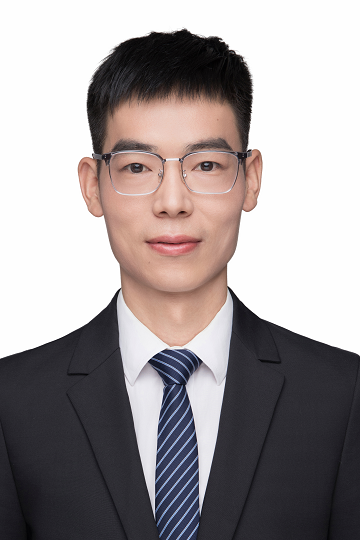
Fei Li,China Three Gorges University, China
Fei Li obtained his B.Eng. (2008), M.Eng. (2011) and Ph.D. (2023) from China Three Gorges University (CTGU). He joined the College of Electrical Engineering and New Energy of CTGU as a lecturer in December 2013, also served as a researcher of Hubei Provincial Key Laboratory for Operation and Control of Cascaded Hydropower Station in CTGU. His research focuses on new power system optimization scheduling; hydropower and pumped storage operation simulation.